
Reviewed August 19, 2026 · General planning information for Central Texas homeowners
1. Stay off the roof
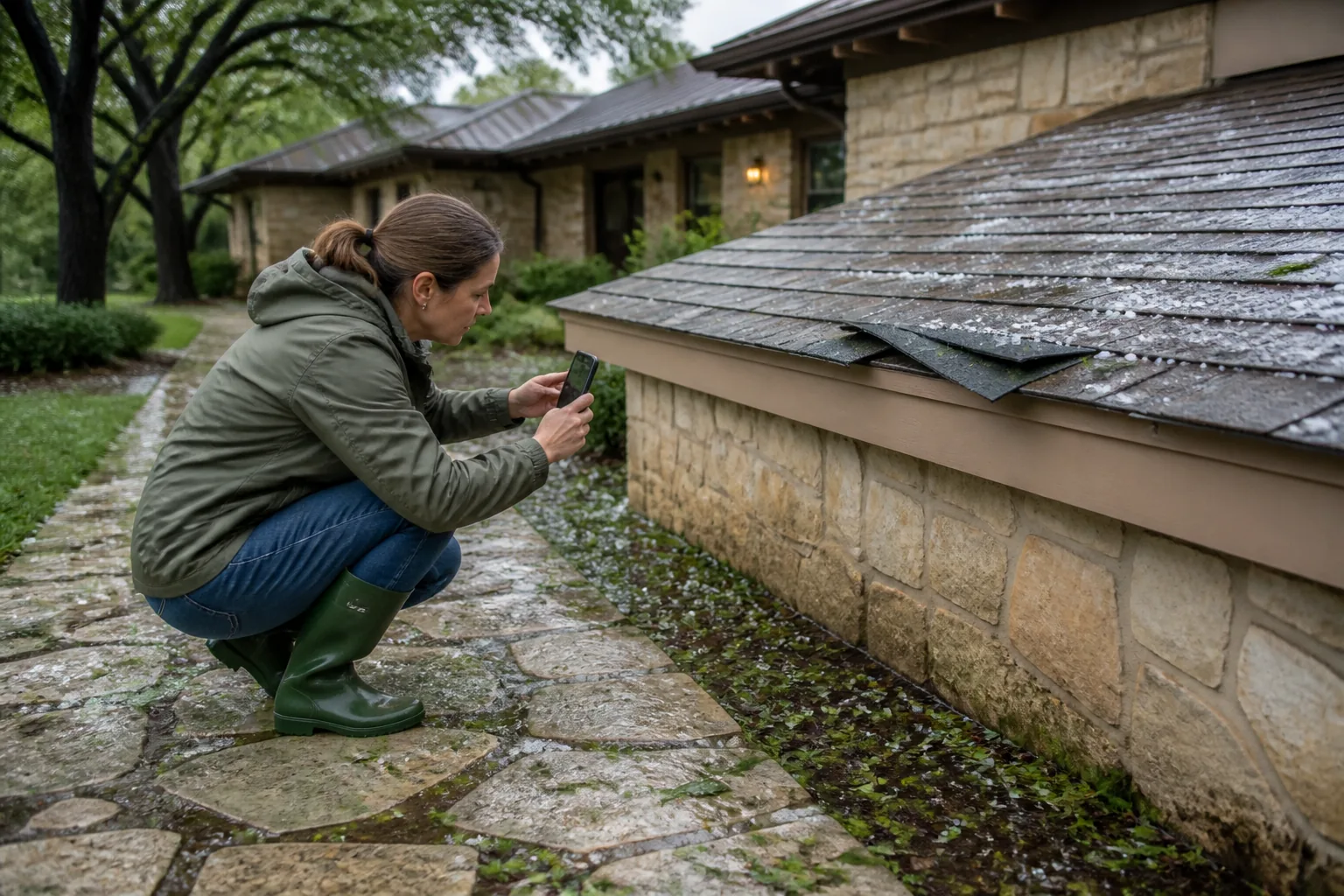
Look from the ground for displaced shingles, debris impact, damaged gutters, or visible openings. Photograph safely. Wet, wind-damaged, or hail-covered roofs are not homeowner inspection surfaces.
2. Control active water
Move belongings, use containers, and protect finishes if it is safe. For an exterior opening, request emergency temporary protection. Keep receipts and photos of reasonable mitigation work.
3. Request a documented condition inspection
Ask for overview photos by roof plane and detail photos of relevant conditions, including vents, flashing, soft metals, gutters, edges, and penetrations. Ask the inspector to separate emergency, repair, and replacement recommendations.
4. Understand roles before signing
The contractor prices and performs construction. The carrier interprets the policy and makes coverage decisions. Read any authorization before signing and do not rely on a promise that coverage or payment is guaranteed.
5. Compare the construction scope
Make sure material, tear-off, underlayment, flashing, ventilation, code items, cleanup, discovered decking, timelines, and warranties are stated. A claim document and a contractor proposal do not automatically describe the same scope.
Common questions
Questions homeowners ask next
Do I need a roofer before contacting my carrier?
You can report a loss according to your policy whenever appropriate. A roof condition inspection may help you understand construction conditions, but it does not determine coverage.
Can a roofer waive my deductible?
Homeowners should be cautious about any promise to absorb or disguise required policy costs. Ask for clear, lawful pricing and consult the policy or a qualified adviser.
What if the roof looks fine from the ground?
Subtle conditions may not be visible from grade. If the property was in the storm path or neighbors have verified damage, a professional inspection can establish a baseline.
This guide is general construction information, not an inspection, binding estimate, insurance, legal, or financial advice. Property conditions and contract terms vary.