
Reviewed August 19, 2026 · General planning information for Central Texas homeowners
A repair is often sensible when
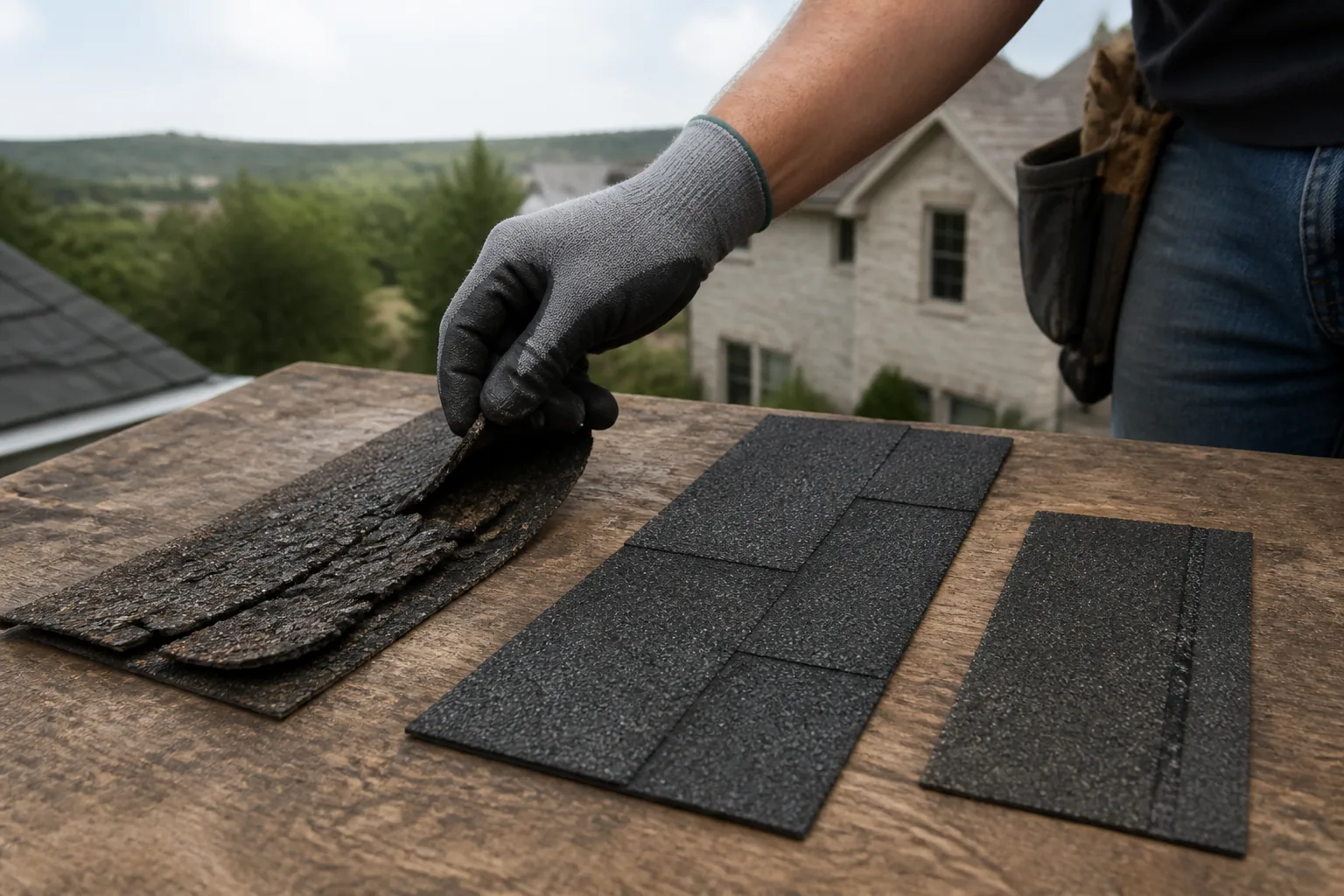
The problem is localized, surrounding material remains flexible and serviceable, matching is acceptable, the roof has useful remaining life, water has not spread through a large area, and the repair can be detailed with a clear warranty.
Replacement becomes more reasonable when
Failures are widespread, shingles are brittle or no longer repairable, leaks recur in different areas, ventilation or decking needs broad correction, there are several incompatible repair layers, or the cost of durable repairs approaches the value of a new system.
Ask for both options when both are valid
A good inspection can separate urgent work, a durable repair path, and a replacement path. Each should explain expected service horizon, limitations, included details, warranty, and the conditions that could change the scope.
Do not let urgency erase diagnosis
An active leak needs quick interior protection and, when safe, temporary exterior control. That does not mean the permanent solution should be chosen without tracing the entry path and evaluating the roof around it.
Common questions
Questions homeowners ask next
Can one missing shingle cause a leak?
It can expose the layer below, but the interior leak location may not align with that shingle. Water can travel along decking or framing.
How many repairs are too many?
There is no universal count. Distribution, material condition, prior repair quality, leak history, and remaining life matter more than a single number.
Should the repair be water-tested?
When appropriate and safe, a controlled water test can help verify diagnosis or repair. Some conditions require rain observation or interior moisture monitoring instead.
This guide is general construction information, not an inspection, binding estimate, insurance, legal, or financial advice. Property conditions and contract terms vary.